
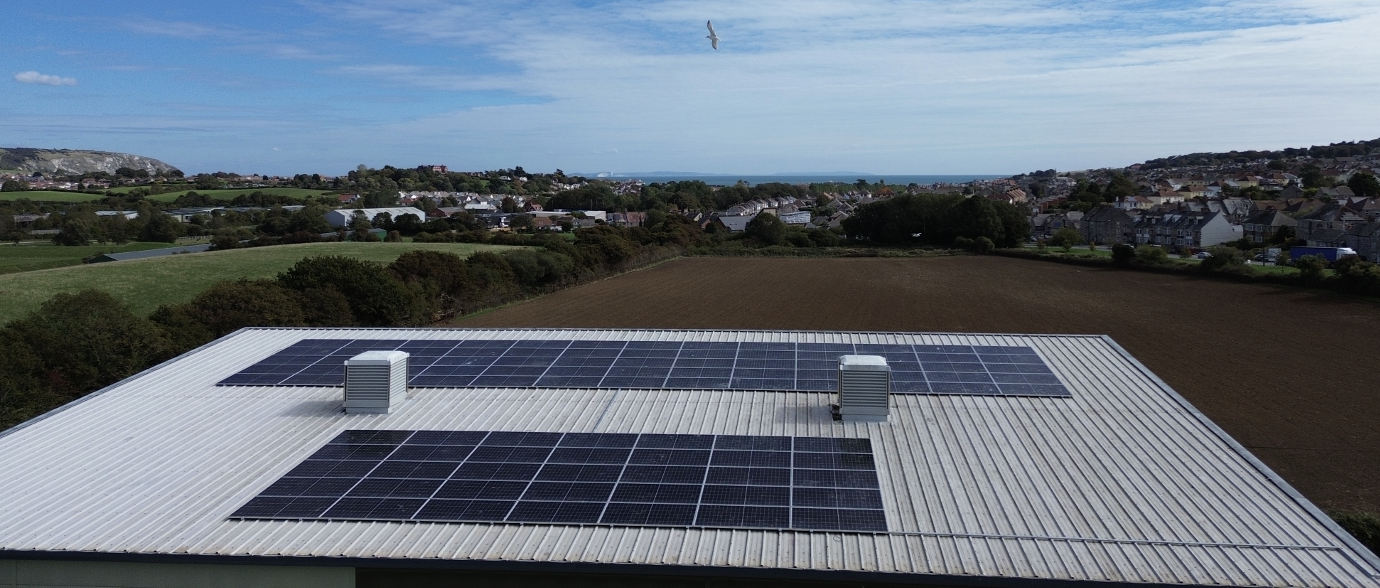
Great British Energy’s solar rollout for schools is a genuinely welcome development. The government-backed initiative has already fitted solar panels on 100 schools across England, with around 250 schools in total set to have installations by summer 2026 – delivering up to an estimated combined £220 million in lifetime savings through local home grown energy generation. For those of us who have spent years making exactly this argument, it is satisfying to see it being made at a national scale.
Here at Dorset Community Energy, we have been doing this work since 2013. Across 30 solar PV installations at community and public buildings in Dorset, our projects have produced enough energy to save an estimated £1million in energy bills. Schools have been central to that effort from the very beginning – and not just in terms of the energy bills we’ve helped reduce. Our installations have also become a living classroom, with pupils learning how renewable energy generation works with DCE staff also going into schools to talk about the technology and work we do.
So it is with mixed feelings that we look at the GBE list of 100 operational schools. Just one is in Dorset.
That is not a criticism of the programme itself, which has rightly targeted schools in areas of deprivation in the North East, West Midlands and North West, ensuring support reaches the communities that need it most. But it does highlight something we know to be true locally: the vast majority of Dorset’s schools are still bearing the full brunt of energy costs without the help that solar can provide.
There are an estimated 390 education sites (nursery, primary, secondary, colleges, university) in the county of Dorset (273 Dorset council and 117 BCP), serving thousands of pupils and students. With only one included in the GBE programme so far and only a handful covered so far by our previous efforts, that leaves potentially well over 300 education sites still exposed to energy bill fluctuations that show little sign of decreasing. For schools – which unlike households have no price cap protection – the picture has at times been stark.
The energy landscape has shifted, but the underlying fragility has not. Every school that doesn’t have solar on its roof is one unexpected price spike away from having to make difficult choices about where its budget goes. We know from direct experience what a difference it makes. DCE has financed installations on schools across the county, and savings will have helped redirect money previously spent on bills back into the things that actually matter – teaching, resources and support staff. The savings are real, they are meaningful and they compound over time.
We are actively looking for new sites. If you are connected to a school, a college, or any educational setting in Dorset that doesn’t yet have solar – or that has older panels that could benefit from upgrade or expansion – we would genuinely love to hear from you. Community energy works best when it grows from local relationships and local knowledge, and our members and supporters are often the best source of leads.
The GBE programme is a signal that the national conversation has caught up with what community energy organisations like DCE have known for a decade. But with Dorset schools still waiting, there is plenty of work left to do – and we intend to keep doing it.
Get in touch: If you know of a school or community site that could benefit from a solar installation, please contact us at info@dorsetcommunityenergy.org.uk
Dorset Community Energy is a not-for-profit Community Benefit Society. Our members have invested over £1.1 million financing solar panel installations across Dorset since 2013.